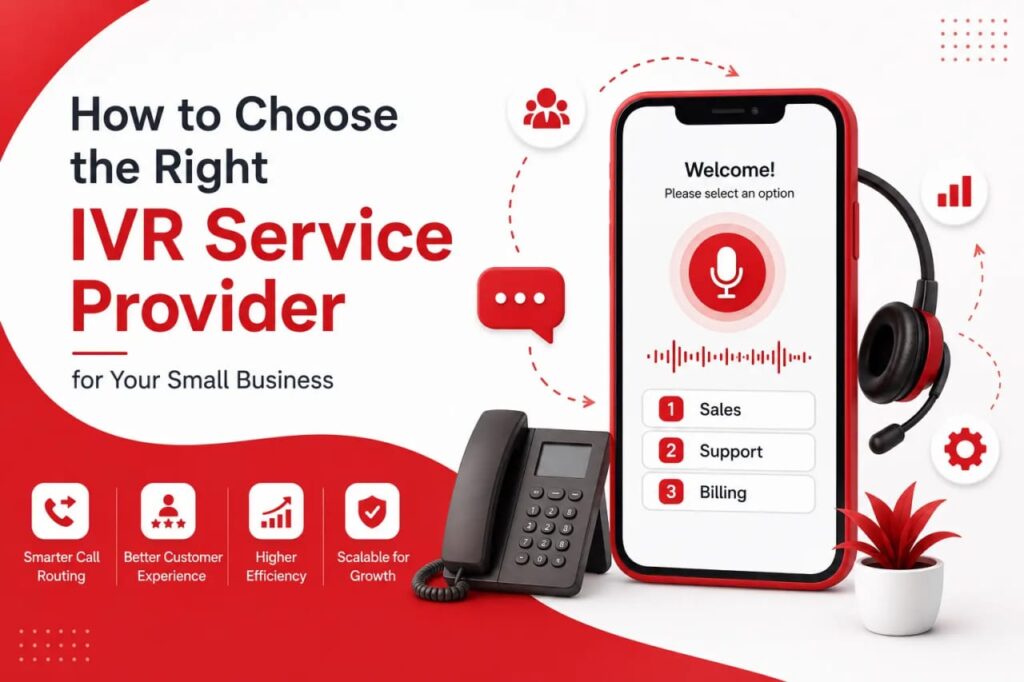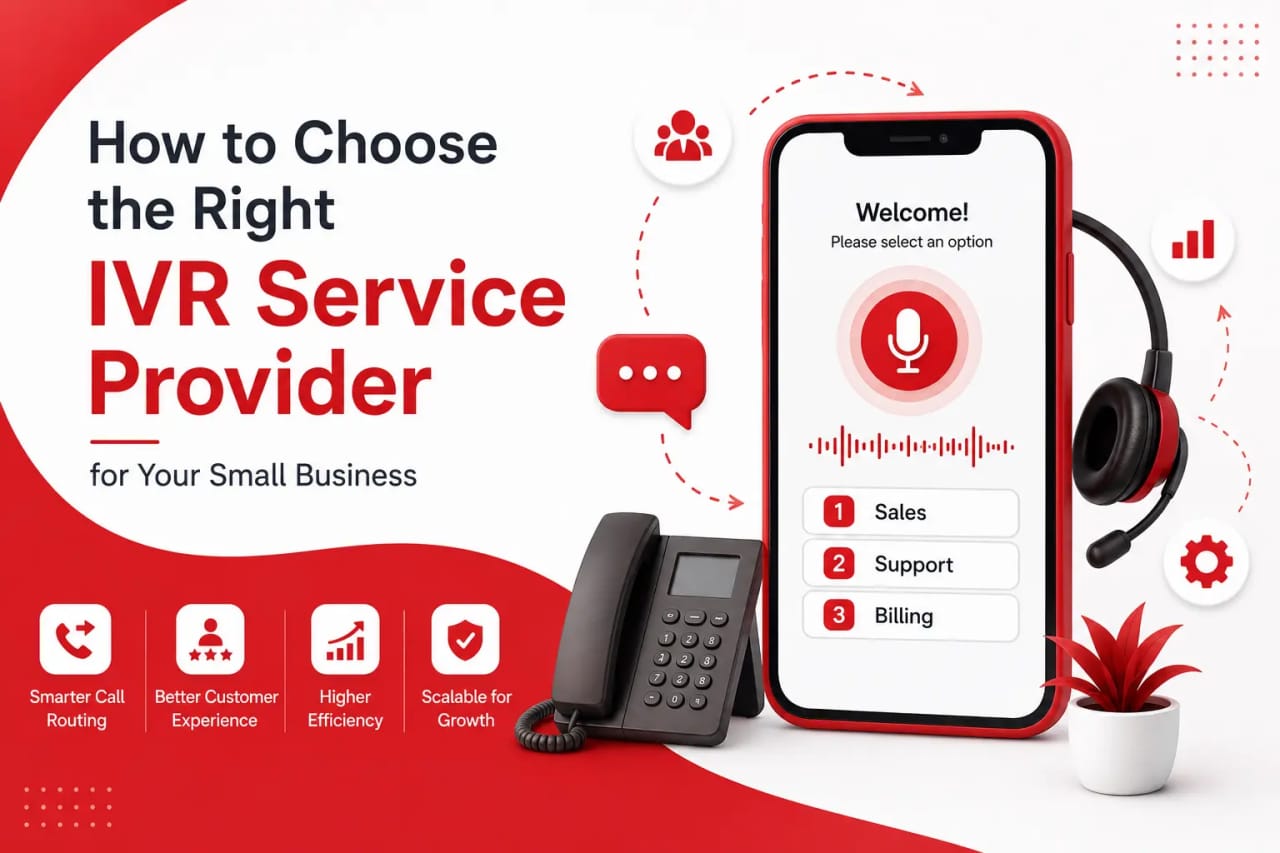
How to Choose the Right IVR Service Provider for Your Small Business
Customer calls can directly impact sales, support quality, and customer satisfaction. Yet many small businesses struggle to manage incoming calls efficiently, especially during peak hours or when teams are operating with limited resources.
This is where an IVR system can make a significant difference.
By automatically answering and routing calls, IVR helps businesses provide a professional caller experience without increasing staffing costs. However, not every solution is built the same. Choosing the right IVR service provider is about more than comparing prices. The solution you select should help your business handle calls efficiently today while supporting future growth.
This guide explains what IVR is, why it matters, and how to choose the best provider for your small business.
What Is IVR?
IVR stands for Interactive Voice Response.
It is an automated phone system that interacts with callers through voice prompts or keypad inputs. Instead of a receptionist manually transferring every call, the system automatically guides callers to the right department.
IVR solutions are typically offered by an IVR service provider that helps businesses set up automated call routing, custom greetings, business-hour configurations, and other communication workflows. The right provider can ensure the system is easy to manage, scalable, and capable of supporting future business growth.
A typical IVR menu may sound like this:
- Press 1 for Sales
- Press 2 for Customer Support
- Press 3 for Billing
Once the caller makes a selection, the system routes the call accordingly.
Understanding what is IVR is important because it forms the foundation of modern business communication. Whether you’re handling customer support, sales inquiries, or appointment bookings, an IVR system helps ensure callers reach the right destination quickly.
Why Small Businesses Need an IVR System
Many business owners assume IVR technology is only useful for large enterprises. In reality, an IVR system for small business operations can provide immediate benefits.
1. Reduce Missed Calls
Missed calls often mean missed revenue opportunities.
When employees are busy or unavailable, incoming calls can go unanswered. An IVR system ensures callers are greeted and routed appropriately instead of hearing a busy tone or being left without assistance.
2. Create a Professional Experience
Customers expect businesses to have organized communication processes.
Even a small company can appear more professional with automated greetings, department-based routing, and business-hour announcements.
3. Improve Call Management
As call volumes grow, manually managing every inquiry becomes difficult.
IVR helps distribute calls efficiently and reduces the time employees spend transferring customers between departments.
4. Support Business Growth
The communication setup that works for five employees may not work for twenty.
Implementing IVR for small business operations early makes it easier to scale customer communication as the company grows.
Key IVR Features to Look For
When comparing solutions, pay close attention to the available IVR features.
The best providers offer tools that improve both operational efficiency and customer satisfaction.
1. Smart Call Routing
Call routing is one of the most important features of any IVR system.
Instead of sending every caller to a single phone line, the system directs calls based on customer selections. This reduces wait times and helps callers reach the right team faster.
2. Business Hours Automation
A good IVR solution should automatically adjust call flows based on business hours.
For example:
- Route calls to agents during working hours
- Send callers to voicemail after hours
- Provide holiday announcements
- Offer emergency contact options when needed
3. Custom Greetings
Custom greetings allow businesses to create a branded caller experience.
They can also provide useful information such as office hours, service updates, or promotional announcements.
4. Call Recording
Call recording helps businesses monitor service quality, train employees, and resolve customer disputes more effectively.
5. Analytics and Reporting
Reporting tools provide valuable insights into:
- Total call volume
- Missed calls
- Average call duration
- Peak calling hours
- Customer interaction trends
These insights help businesses continuously improve their communication processes.
6. CRM Integrations
Integration with CRM platforms and customer support tools can significantly improve efficiency.
Agents can access customer information faster, leading to quicker and more personalized service.
How IVR Automation Improves Customer Service
One of the biggest advantages of modern phone systems is IVR automation.
Automation eliminates repetitive manual tasks and allows businesses to handle more calls without adding additional staff.
For example, IVR automation can:
- Route calls automatically
- Collect customer information before connecting an agent
- Share business-hour information
- Direct callers to self-service options
- Prioritize urgent inquiries
This not only improves efficiency but also helps customers get assistance faster.
For small businesses with limited resources, automation can have a measurable impact on productivity and customer satisfaction.
How to Evaluate an IVR Service Provider
Choosing the right IVR service provider involves more than comparing monthly subscription costs.
Consider the following factors before making a decision.
1. Reliability and Uptime
Communication systems need to be available when customers call.
Look for providers with a strong reputation for uptime and service reliability. Even short periods of downtime can result in lost leads and frustrated customers.
2. Ease of Setup
Small businesses often do not have dedicated IT teams.
A platform should be simple to configure, manage, and update without requiring advanced technical expertise.
3. Scalability
Your business may have different communication needs a year from now.
Choose a solution that can accommodate higher call volumes, additional departments, and more advanced workflows as your company grows.
When evaluating cloud communication platforms, look for solutions that offer flexible call management and advanced IVR capabilities without requiring major infrastructure changes as your business expands.
4. Customization Options
Every business operates differently.
A quality provider should allow you to customize:
- Call flows
- Routing rules
- Greetings
- Business-hour schedules
- Department structures
5. Integration Capabilities
Modern business communication rarely operates in isolation.
The ability to integrate with CRM, helpdesk, and sales platforms can improve both efficiency and customer experience. Businesses often benefit from solutions that combine IVR, call routing, analytics, and customer management tools within a single communication ecosystem.
6. Customer Support
Technical issues can happen at any time.
Responsive customer support is essential when evaluating any IVR service provider, especially if customer calls are a critical part of your business.
7. Transparent Pricing
Pricing should be easy to understand.
Look beyond the advertised monthly fee and review any setup costs, usage charges, or feature-based add-ons that may affect long-term expenses.
Common Mistakes to Avoid
Businesses often make the following mistakes when implementing an IVR system.
1. Creating Complex Menus
Too many options can frustrate callers.
Keep menu structures simple and intuitive.
2. Choosing Based Only on Price
The cheapest solution may not provide the functionality your business needs.
Focus on long-term value rather than upfront cost alone.
3. Ignoring Analytics
Call analytics provide valuable insights into customer behavior and service performance.
Regularly reviewing reports can help identify areas for improvement.
4. Failing to Test Call Flows
Always test the customer journey from start to finish.
Even minor routing errors can create a poor caller experience.
Conclusion
Choosing the right IVR service provider is an important decision for any growing business. The right solution can reduce missed calls, improve customer experiences, and make communication more efficient across your organization.
By understanding what IVR is, evaluating essential IVR features, and considering the benefits of IVR automation, small businesses can confidently select a solution that supports long-term growth. A well-designed IVR system doesn’t just route calls; it helps create a smoother, more professional experience for every customer who contacts your business.
As customer expectations continue to rise, investing in the right communication infrastructure today can help your business deliver better service, capture more opportunities, and scale with confidence.

- SEO for Carpet Cleaners: Capture More High-Intent Local Searches

- How to Choose the Right IVR Service Provider for Your Small Business
- How Developers Are Shipping Software Faster With AI in 2026
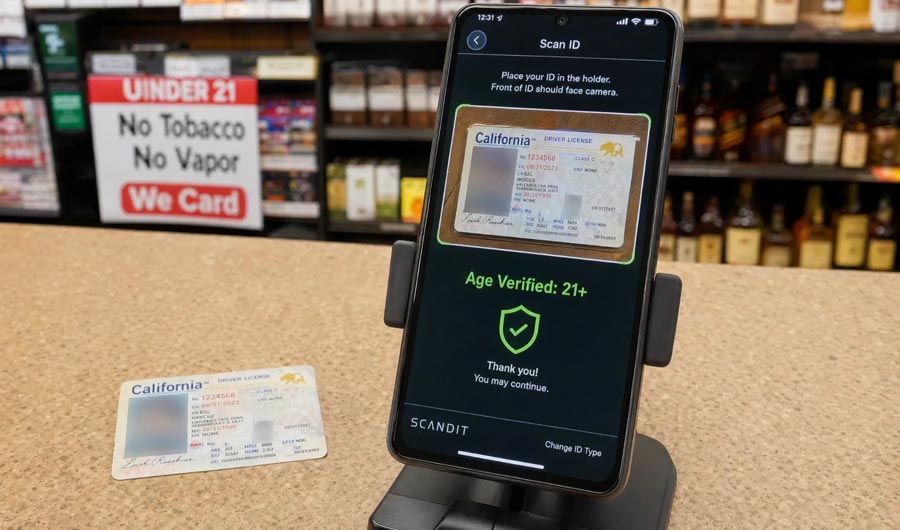
- Building a Secure ID Scanner App for Age-Restricted Retail
- How Custom Plugins Can Improve WordPress Website Performance