How to Choose the Right Fulfillment Partner for Your DTC Brand
The launch of the direct-to-consumer brand is a thrilling experience. You create your own product, bring your audience directly to the market, and create a unique customer experience from beginning to end. But there is an important factor that often separates brands that are quickly on the scale from those who struggle behind the curtain: fulfillment.
Choosing the right fulfillment partner may be a difference between late shipment and glowing five -star reviews. If your products do not come in time or in the right position, customers notice. And in a world where the expectations of delivery are sky-high, your fulfillment plays a huge role in the perception of the customer satisfaction and the notion of the brand.
In this post, we are going to run you through how to choose the right fulfillment partner for your DTC brand. Whether you are preparing for the scale or looking to solve the current logical headache, this guide will help you make the best decisions for your business.
Why Fulfillment Matters More Than You Think
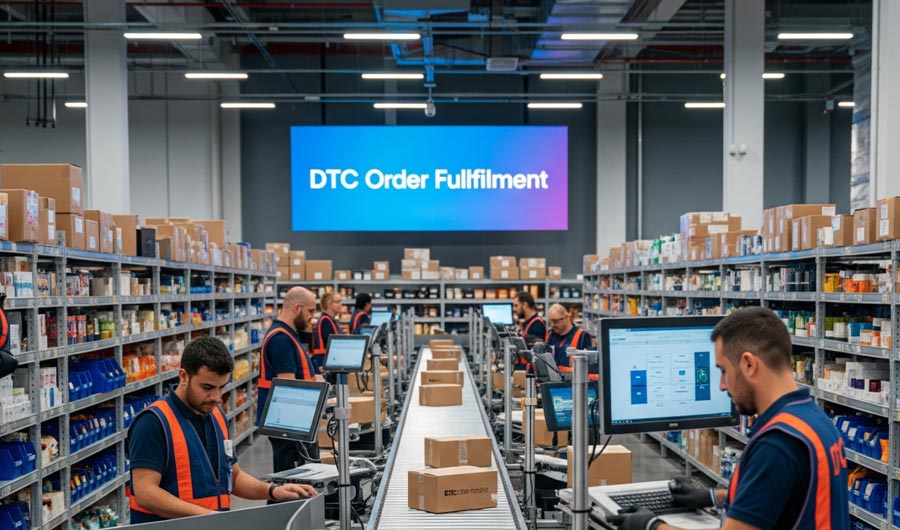
The unboxing experience is one of the few tangible interactions your customer has with your brand. It reflects your reliability, professionalism, and attention to detail. While marketing and branding get most of the spotlight, DTC order fulfillment is the silent engine that keeps your operation moving.
Here is what a strong fulfillment partner can offer:
- Faster shipping that keeps customers happy
- Reduced errors and returns
- Better inventory management
- Easier scaling as your order volume grows
- Lower shipping costs through optimized logistics
On the flip side, the wrong partner can result in delays, damaged products, stock issues, and unhappy customers who never return.
Key Factors to Consider When Choosing a Fulfillment Partner
Not all supply companies are made equal. Some are created for speed, some for privatization, and others are for large -scale automation. The perfect one for you depends on your product type, customer expectations and development goals.
Here are important factors to evaluate when choosing a supply partner:
1. Location and shipping area
Where are your customers located? If most of your customers are in the US, working with a supply center on the east coast or at a central location can reduce delivery time and shipping costs.
Look for:
- Many supply centers in major areas
- Proximity to major shipping hub
- Support for international shipping if necessary
2. Technology and Integration
Your fulfillment partner should originally integrate with your ecommerce platform. The more your order flows, the less errors and delays.
Ask about:
- Real -time inventory tracking
- Compatibility with Shopify, WooCommerce, Amazon and other platforms
- Automated Order Sinking and Tracking Update
3. Scalability
Now you can ship 100 orders in a month, but what happens when you scale up to 1000 or 10000? Choose a partner who can grow with you.
Look for:
- Volume discount as scale
- Experience to handle the demand for peak season
- Flexibility to adjust storage and shipping
4. Packaging and Customization
Packaging is a large part of the brand experience. Some supply centers provide basic white-labeled packaging, while others support branded boxes, custom inserts and unique unboxing experiences.
Ask yourself:
- Do you want to control the unboxing experience?
- Does the participant support branded packaging and inserts?
- Can they help with environmentally friendly or durable material?
5. Cost Structure
The fulfillment cost can be difficult to understand. It is important to go beyond the base storage and shipping fees and understand the full cost structure.
Watch out for:
- Hidden fees for selection, packing or special handling
- Storage fee for slow running list
- Setup or onboarding cost
A good partner will offer transparent pricing that matches the needs of your order volume and storage.
Questions to Ask Potential Fulfillment Partners
Dig deep before you sign any contract, how a potential partner operates. These questions will help you understand whether they are a good fit.
- What is your average order processing time?
- Do you offer the same day fulfillment?
- How do you handle returns and exchanges?
- What is your accuracy rate for orders?
- Can I go to your warehouse or talk to existing customers?
- What happens if any shipping is delayed or made by mistake?
Their answers will show how much priority they give to customer service, focus on expansion and transparency.
Red Flags to Watch For
Sometimes, a partner looks great on paper, but shows warning signs during the initial conversation. Be alert if you notice:
- Vague or incompatible pricing details
- Poor communication or slow response time
- No customer admirer or case study
- Limited technology or old system
- Packaging or insufficiency
Your DTC order supply partner should act as the expansion of your brand, not just as a seller.
Building a Long-Term Relationship
The best fulfillment partnership is built on trust, communication and shared goals. Do not consider it as a one -time transaction. Instead, invest in creating a collaborative relationship.
Here is how to strengthen that relationship:
- Set clear KPI for accuracy, delivery time and return
- Regular performance review schedule
- Share development plans so that they can prepare further
- Keep communication open and active
The supply is not stable. As your brand develops, you will need to fulfill. A partner who understands it will grow with you, will not catch you back.
Conclusion
Finding the right fulfillment partner is an important decision for any direct-to-consumer brand. When your logistics run smoothly, you can focus on product growth, marketing and scale to your brand. But when the supply is broken, this customer affects everything from satisfaction to profit margin.
By considering the right factors, asking the correct question, and looking for the red flag, you can find a partner who aligns with your goals and provides a world -class experience to your customers.
A successful DTC brand has a reliable, responsible and technology-loving fulfillment in the heart of the brand that helps in converting promises to distributed experiences. Take time to choose from intelligence. Your customers will thank you for this.
FAQ
1. What is a fulfillment partner for DTC brands?
A fulfillment partner handles the storage, packing, and shipping of your products to customers. They ensure orders are processed efficiently and delivered on time.
2. Why is location important when choosing a fulfillment center?
The closer your fulfillment center is to your customers, the faster and cheaper it is to deliver orders. Strategic locations help reduce shipping times and costs.
3. Can a small DTC brand afford a fulfillment partner?
Yes, many fulfillment providers offer scalable solutions for startups and small businesses. Some even specialize in helping new DTC brands grow.
4. What happens if my order volume increases suddenly?
Good fulfillment partners offer flexible scaling options and are prepared for seasonal surges. Always ask about how they handle rapid growth.
Author Bio
Arishekar N. is the director of marketing and business development at AMZ Prep. Bringing decades of experience in driving growth for e-commerce businesses, he has established himself as a thought leader in the digital marketing space.
His expertise spans strategic marketing, e-commerce operations, SEO, advertising, and branding. Arishekar has successfully led numerous campaigns that have yielded specific achievements, such as a 200% increase in online sales for client businesses.
As a regular contributor to respected industry publications, Arishekar shares valuable insights on optimizing online business performance and navigating the ever-changing e-commerce landscape. His data-driven approach and commitment to ethical marketing practices have earned him recognition as a trusted voice in the industry.
Arishekar dedicates his efforts to equipping entrepreneurs and marketers with practical strategies that can significantly enhance their financial performance. For the latest trends, tips, and expert analysis in e-commerce and digital marketing, follow Arishekar N on https://in.linkedin.com/in/arishekar

- How to Choose the Right IVR Service Provider for Your Small Business

- How Developers Are Shipping Software Faster With AI in 2026
- Building a Secure ID Scanner App for Age-Restricted Retail
- How Custom Plugins Can Improve WordPress Website Performance
- UX vs Marketing: What Really Drives User Engagement?